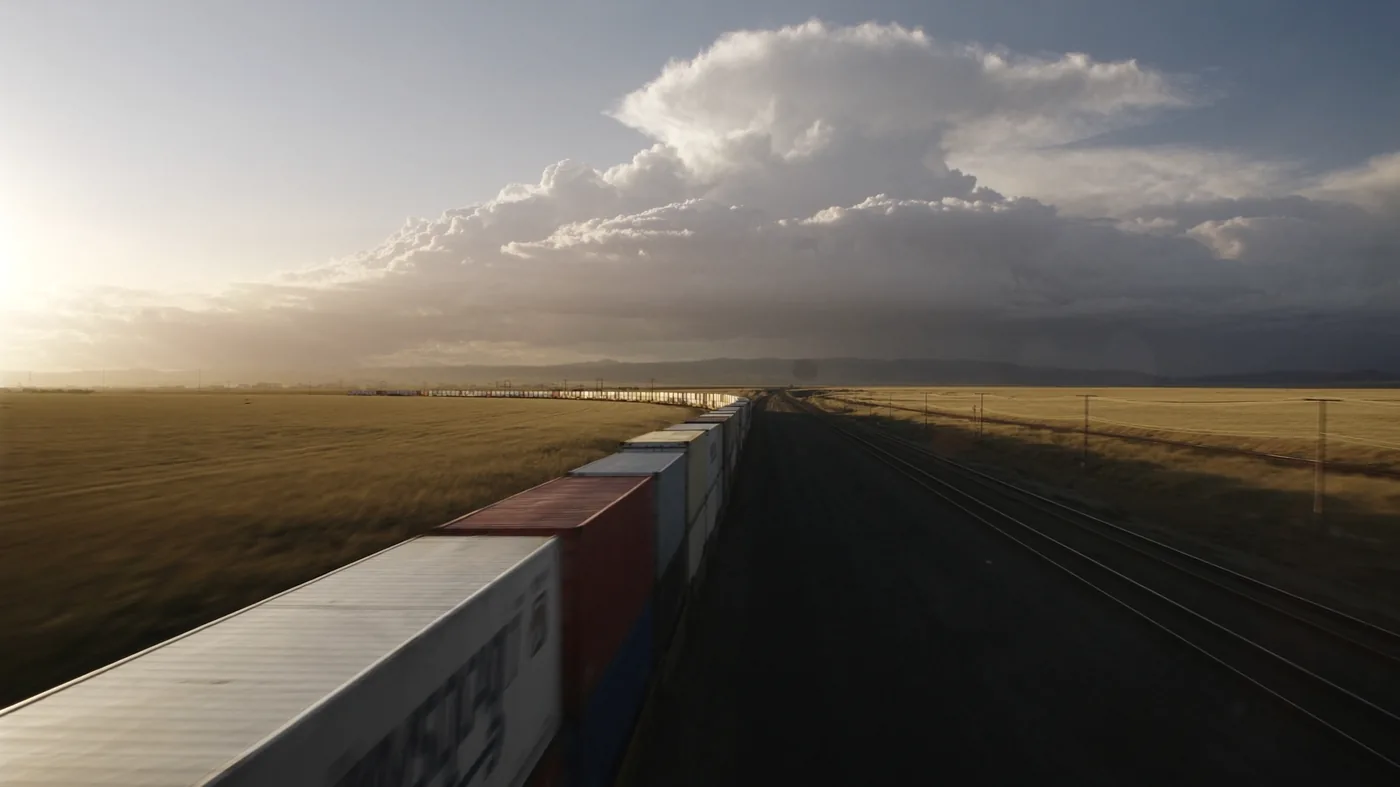
Kiedy w 2011 roku pierwszy komercyjny pociąg towarowy wyruszył z Chongqing do Duisburga, było to oświadczenie geopolityczne przebrane za eksperyment w łańcuchu dostaw.1 Czternaście lat później transport kolejowy Chiny–Europa jest dojrzałym i intensywnie wykorzystywanym korytarzem transportowym — do 2023 roku zrealizowano na nim łącznie około 17,000 przejazdów pociągów2, a sam korytarz zajął pozycję pośrednią między szybkością transportu lotniczego a ekonomiką transportu morskiego.
Ten przewodnik obejmuje wszystko, co europejski załadowca powinien wiedzieć o tym korytarzu: które trasy obecnie funkcjonują, jak wyglądają realistyczne czasy tranzytu, jak kształtują się koszty, jakie ładunki najlepiej nadają się do transportu kolejowego oraz jakie praktyczne przeszkody należy uwzględnić w planowaniu.
Czym jest korytarz kolejowy Chiny–Europa?
Transport kolejowy Chiny–Europa funkcjonuje pod wspólną marką China Railway Express (CR Express) — sieci pociągów blokowych kursujących według stałego rozkładu, łączących główne chińskie centra produkcyjne i logistyczne z miastami europejskimi. Nie są to pociągi pasażerskie z doczepionymi wagonami towarowymi, lecz dedykowane, skonteneryzowane usługi towarowe realizowane według stałego harmonogramu, z czasami tranzytu liczonymi w dniach, a nie w tygodniach.
Usługi te wykorzystują standardowe kontenery ISO (20- i 40-stopowe) załadowane na platformy kolejowe. Ponieważ rozstaw torów stosowany w Chinach i krajach Wspólnoty Niepodległych Państw (WNP) — szeroki tor 1,520 mm — różni się od standardowego europejskiego rozstawu (1,435 mm), kontenery muszą zostać przeładowane na inne wózki lub wagony na granicy. Przeładunek ten odbywa się w kluczowych punktach granicznych i stanowi rutynowy element usługi, jednak wydłuża czas przewozu i jest istotnym czynnikiem przy planowaniu harmonogramu.
Politycznym impulsem dla rozwoju tych usług jest chińska Inicjatywa Pasa i Szlaku (Belt and Road Initiative, BRI), która sfinansowała infrastrukturę terminalową po obu stronach korytarza i w minionych latach subsydiowała częstotliwość kursowania pociągów. W miarę stopniowego ograniczania dotacji usługi musiały zacząć konkurować na warunkach rynkowych — proces ten sprawił, że korytarz stał się bardziej efektywny i lepiej wyceniony.
Trzy główne korytarze
Chiny i Europę łączą trzy geograficzne korytarze kolejowe, różniące się trasą, profilem ryzyka oraz obecną przydatnością dla zachodnich załadowców.
| Korytarz | Trasa | Typowy czas tranzytu | Status (2025) |
|---|---|---|---|
| Korytarz północny | Chiny → Mongolia/Rosja → Białoruś → Polska → Europa | 12–14 dni | W dużej mierze zawieszony |
| Korytarz środkowy (transkaspijski) | Chiny → Kazachstan → Morze Kaspijskie (prom) → Azerbejdżan → Gruzja → Turcja → Europa | 14–20 dni | Aktywny i rozwijający się |
| Korytarz południowy | Chiny → Azja Środkowa → Iran → Turcja → Europa | 18–25 dni | Ograniczony / niszowy |
Korytarz północny
Historycznie najszybsza i najpopularniejsza trasa — korytarz północny przebiega przez Rosję i Białoruś, zanim wjedzie do UE przez Polskę. Od momentu nałożenia przez kraje zachodnie sankcji na Rosję po inwazji na Ukrainę w 2022 roku, zdecydowana większość ładunków o europejskim i amerykańskim pochodzeniu/przeznaczeniu została przekierowana z tego korytarza. Rosyjskie koleje (RZhD) nadal funkcjonują, jednak spedytorzy i załadowcy z siedzibą w UE napotykają ograniczenia prawne, finansowe i wizerunkowe, które sprawiają, że korytarz północny jest obecnie nieopłacalny dla większości zachodnich łańcuchów dostaw.
Korytarz środkowy (transkaspijski międzynarodowy szlak handlowy)
Korytarz środkowy — nazywany czasem transkaspijskim międzynarodowym szlakiem handlowym (TITR) — od 2022 roku stał się podstawową alternatywą dla europejskich załadowców. Ładunki przemieszczają się z Chin przez Kazachstan, przekraczają Morze Kaspijskie promem do Azerbejdżanu lub Turkmenistanu, przechodzą przez Gruzję i wjeżdżają do Turcji, skąd są łączone z europejskimi sieciami kolejowymi lub drogowymi. Trasa ta całkowicie omija terytorium Rosji.
Korytarz ten dynamicznie się rozwija, a znaczące inwestycje infrastrukturalne realizowane są w portach po obu stronach Morza Kaspijskiego. Głównym wąskim gardłem pozostaje przepustowość promów kaspijskich, co może powodować wahania w harmonogramach. Mimo to korytarz środkowy stał się domyślnym wyborem dla zgodnych z przepisami przewozów kolejowych Chiny–Europa, a czasy tranzytu z roku na rok ulegają poprawie.
Korytarz południowy
Korytarz południowy prowadzi ładunki przez Azję Środkową i Iran. Choć omija Rosję, zgodność z sankcjami dotyczącymi Iranu stanowi złożone zagadnienie dla wielu zachodnich firm. Korytarz ten wykorzystywany jest głównie na wybranych trasach handlowych — zwłaszcza dla ładunków pochodzących z regionu Zatoki Perskiej lub tam kierowanych — i obecnie nie jest standardową opcją dla większości europejskich załadowców.
Porównanie czasów tranzytu: kolej a transport morski a transport lotniczy
Wartość, jaką oferuje transport kolejowy, plasuje się dokładnie pomiędzy transportem morskim a lotniczym. Nie jest to najtańsza opcja, ale jest znacznie szybsza niż transport morski — różnica ta może mieć decydujące znaczenie przy zarządzaniu poziomem zapasów, reagowaniu na skoki popytu czy wysyłce towarów sezonowych.
Kryzys na Morzu Czerwonym / w Kanale Sueskim w latach 2023–2024, który zmusił statki oceaniczne do zmiany trasy przez Przylądek Dobrej Nadziei, wydłużył wiele przesyłek morskich Chiny–Europa o 10–14 dni i spowodował wyraźne przesunięcie ładunków w stronę transportu kolejowego — trend ten utrzymuje się również w 2025 roku.
| Środek transportu | Typowy czas tranzytu (Chiny–Europa Środkowo-Wschodnia) | Niezawodność | Najlepsze zastosowanie |
|---|---|---|---|
| Kolej (CR Express) | 12–18 dni | Średnia–wysoka; wahania harmonogramu na korytarzu środkowym | Towary o średniej wartości, uzupełnianie zapasów, strategia hybrydowa |
| Transport morski (przez Suez) | 25–35 dni | Średnia; zależna od zatorów portowych i zmian tras | Ładunki masowe, towary o niskiej wartości, duże wolumeny |
| Transport lotniczy | 5–7 dni (od drzwi do drzwi) | Wysoka (zależna od pogody/dostępności slotów) | Pilne, wysokowartościowe, łatwo psujące się, bardzo małe wolumeny |
Porównanie kosztów
Koszt jest głównym czynnikiem ograniczającym rozwój transportu kolejowego. Zgodnie z ogólną zasadą, stawki frachtu kolejowego między Chinami a Europą są około 3–5 razy wyższe za kontener niż w transporcie morskim i około 4–6 razy niższe niż w transporcie lotniczym.3 Dokładna wartość zależy w dużej mierze od korytarza, kierunku przewozu (trasa z Chin do Europy jest zwykle tańsza niż z Europy do Chin ze względu na nierównowagę przepływów), rodzaju ładunku oraz warunków rynkowych w momencie rezerwacji.
Przewaga kosztowa kolei nad transportem lotniczym znacząco rośnie, gdy uwzględni się ubezpieczenie ładunków o wysokiej wartości (transport lotniczy wymaga wyższych składek dla niektórych towarów), koszty utrzymania zapasów (dodatkowe 15–20 dni w transporcie morskim zamraża kapitał obrotowy) oraz koszty magazynowania zapasów, do których zmusza kupujących długi czas realizacji dostawy morskiej.
Stawki frachtu kolejowego wahają się na wciąż dojrzewającym rynku. Dotacje chińskiego rządu — które historycznie sztucznie zwiększały konkurencyjność tras CR Express — zostały w ostatnich latach ograniczone, co przybliżyło stawki do poziomu rynkowego. Zawęziło to różnicę względem transportu morskiego na niektórych trasach, ale jednocześnie uczyniło kolej bardziej zrównoważoną komercyjnie propozycją dla przewoźników.
Co można przewozić?
Transport kolejowy Chiny–Europa obsługuje standardowe kontenery ISO 20- i 40-stopowe. Koleją można przewozić niemal każdy towar nadający się do konteneryzacji i niepodlegający szybkiemu zepsuciu. Obecny profil ładunków przewożonych tym korytarzem odzwierciedla realia produkcyjne Azji Wschodniej oraz wzorce konsumpcji w Europie:
- Elektronika i podzespoły— laptopy, półprzewodniki, elektronika użytkowa
- Części motoryzacyjne— rosnący segment, ponieważ europejscy producenci samochodów coraz częściej sprowadzają podzespoły z Chin
- Maszyny i urządzenia przemysłowe
- Towary konsumpcyjne— meble, odzież, artykuły gospodarstwa domowego
- E-commerce— platformy takie jak Alibaba i Shein są znaczącymi użytkownikami transportu kolejowego w realizacji zamówień B2C
Co nie nadaje się do transportu kolejowego
Transport kolejowy zasadniczo nie jest odpowiedni dla:
- Towarów łatwo psujących się— kolej nie dysponuje spójną dostępnością wagonów chłodni na wszystkich korytarzach, a 14–20 dni to zbyt długo dla świeżych produktów
- Ładunków o bardzo wysokiej wartości i pilnym charakterze— gdy czas dostawy ma kluczowe znaczenie, właściwym wyborem jest transport lotniczy z czasem tranzytu 5–7 dni
- Towarów niebezpiecznych— przepisy dotyczące materiałów niebezpiecznych różnią się w zależności od kraju na trasie, a wymogi dokumentacyjne są złożone; niezbędna jest konsultacja ze specjalistą
- Ładunków ponadgabarytowych i nietypowych— przeładunki związane ze zmianą rozstawu torów na granicach czynią to niepraktycznym bez specjalistycznych rozwiązań
Kluczowe centra nadania w Chinach i centra odbioru w Europie
Sieć CR Express ukształtowała się wokół kilku chińskich miast położonych w głębi lądu, pełniących funkcję punktów konsolidacji, oraz grupy europejskich terminali odbierających większość przyjeżdżających pociągów.
Chiny — główne centra nadania
- Chongqing— miejsce startu inauguracyjnego połączenia do Duisburga w 2011 roku; ważna baza produkcji motoryzacyjnej i elektronicznej
- Chengdu— jedno z najczęściej kursujących połączeń do Europy
- Xi'an— centrum logistyczne środkowych Chin, silne połączenia z Azją Środkową
- Yiwu— chińska stolica drobnych towarów; obsługuje ogromne wolumeny towarów konsumpcyjnych
- Zhengzhou— ważne centrum eksportu elektroniki, silnie powiązane z łańcuchem dostaw Foxconn
Europa — główne centra odbioru
Duisburg w Niemczech obsługuje około 40% wszystkich przyjazdów pociągów na trasie Chiny–Europa w Europie, co czyni go niekwestionowanym terminalem bramowym.4 Do innych ważnych centrów odbioru należą:
- Hamburg— kluczowy punkt dalszej dystrybucji do Skandynawii i Europy Północnej
- Warszawa / Łódź (Polska)— coraz istotniejszy dla dystrybucji w Europie Środkowo-Wschodniej, w tym na rynkach CZ, SK i HU
- Budapeszt (Węgry)— rosnąca rola regionalnego węzła logistycznego, wraz z chińskimi inwestycjami w linię kolejową Budapeszt–Belgrad
- Wiedeń (Austria)— ugruntowany węzeł logistyczny w Europie Środkowej
- Praga (Czechy)— rozwijający się terminal z bezpośrednimi połączeniami do niemieckich centrów
Dzięki działalności obejmującej CZ, SK, HU, PL, RO, DE, HR i BG, HOPI Global Solution jest doskonale przygotowana do zarządzania dystrybucją na ostatnim odcinku z kluczowych terminali kolejowych w Europie Środkowo-Wschodniej — niezależnie od tego, czy ładunek trafia do Warszawy, Budapesztu czy Pragi.
Praktyczne aspekty
Zmiana rozstawu torów na granicach
Różnica między szerokim rozstawem torów (1,520 mm, stosowanym w Rosji, Azji Środkowej i byłych republikach radzieckich) a standardowym europejskim rozstawem (1,435 mm) oznacza, że każda przesyłka kolejowa Chiny–Europa w pewnym momencie przechodzi przeładunek. Na korytarzu północnym odbywało się to na granicy polskiej (Małaszewicze/Brześć). Na korytarzu środkowym proces ten zachodzi w Turcji, gdzie sieć kolejowa łącząca się z Europą przechodzi na standardowy rozstaw. Proces ten — polegający na wymianie wózków wagonowych lub przeładunku kontenerów za pomocą dźwigu — typowo wydłuża czas przewozu o 6–24 godziny i jest uwzględniony w publikowanych czasach tranzytu przez głównych operatorów.
Odprawa celna i dokumentacja
Transport kolejowy między Chinami a UE przebiega przez wiele jurysdykcji, z których każda wymaga zgodnej z przepisami dokumentacji. Spedytorzy powinni przygotować co najmniej:
- Fakturę handlową i listę pakunkową
- List przewozowy kolejowy CIM/SMGS (na wielu połączeniach bezpośrednich stosowany jest list łączony)
- Świadectwo przewozowe EUR.1 lub deklarację REX (w przypadku preferencyjnych stawek celnych, jeśli mają zastosowanie)
- Świadectwo pochodzenia
- Zgłoszenie celne przywozowe w punkcie wjazdu do UE
Każdy z krajów tranzytowych (Kazachstan, Azerbejdżan, Gruzja, Turcja) ma własne wymogi dotyczące dokumentacji tranzytowej. Niezbędny jest spedytor z doświadczeniem w obsłudze korytarza środkowego — to nie jest przesyłka, którą można zrealizować samodzielnie.
Incoterms
Większość przesyłek kolejowych Chiny–Europa jest wyceniana na warunkach DAP (Delivered at Place) do terminala europejskiego lub CIP (Carriage and Insurance Paid) w przypadku towarów o wyższej wartości. Warunki FCA (Free Carrier) są powszechne, gdy spedytor korzysta z własnego przewoźnika zarządzającego całym łańcuchem dostaw. Warunki DDP (Delivered Duty Paid) są możliwe, ale wymagają przewoźnika posiadającego zdolność do obsługi odprawy celnej w UE.
Zrównoważony rozwój
Według danych Międzynarodowego Związku Kolei (UIC), transport kolejowy generuje około 8–10 razy mniej CO₂ na tonokilometr niż transport lotniczy.5 Dla załadowców realizujących cele emisyjne w zakresie Scope 3, zastąpienie transportu lotniczego kolejowym na trasie Chiny–Europa może przynieść istotną redukcję emisji związanych z transportem. Porównanie z transportem morskim jest bardziej złożone — transport morski również cechuje się niską emisyjnością — jednak krótszy czas tranzytu kolei zmniejsza emisje związane z utrzymywaniem zapasów oraz zużycie energii na chłodzenie w przypadku odpowiednich rodzajów ładunków.
Kiedy transport kolejowy ma sens dla Twojego łańcucha dostaw?
Transport kolejowy nie jest właściwym rozwiązaniem dla każdej przesyłki na trasie Chiny–Europa. Sprawdza się natomiast wtedy, gdy spełnionych jest kilka warunków:
- Czas tranzytu ma znaczenie, ale nie na tyle, by uzasadnić koszty transportu lotniczego.Jeśli potrzebujesz towaru w ciągu 15 dni i nie możesz czekać 35, ale nie możesz też ponieść dodatkowych kosztów transportu lotniczego, kolej jest logicznym rozwiązaniem.
- Twój ładunek ma średnią lub wysoką wartość.Różnicę kosztową między koleją a transportem morskim łatwiej jest zaakceptować — a oszczędności w kapitale obrotowym wynikające z krótszego czasu tranzytu łatwiej obliczyć — gdy wartość jednostkowa towaru jest wystarczająco wysoka.
- Niezawodność transportu morskiego jest niska.W okresach zakłóceń w Kanale Sueskim lub poważnych zatorów portowych przewaga kolei pod względem przewidywalności nad transportem morskim znacząco rośnie.
- Masz cele redukcji emisji w zakresie Scope 3.Kolej oferuje wiarygodny i weryfikowalny sposób ograniczenia emisji transportowych na jednym z najbardziej obciążonych szlaków towarowych na świecie, bez nadmiernego wydłużania czasu tranzytu.
- Wysyłasz towar z centrum dobrze obsługiwanego przez CR Express.Jeśli Twój dostawca ma siedzibę w Chengdu, Chongqing lub Zhengzhou, masz dostęp do częstych i ugruntowanych połączeń kolejowych zamiast konsolidacji ładunku w porcie przybrzeżnym na potrzeby transportu morskiego.
Decyzja rzadko jest jednoznaczna. Wielu załadowców stosuje podejście hybrydowe: transport morski dla zapasów masowych i wolno rotujących oraz kolej dla zamówień uzupełniających lub produktów o wyższej wartości. Taka strategia podziału pozwala zoptymalizować koszty i poziom obsługi w całym portfolio SKU, zamiast stosować jeden środek transportu do wszystkiego.
Podsumowanie
Transport kolejowy Chiny–Europa przeszedł drogę od symbolu Inicjatywy Pasa i Szlaku do poważnej, komercyjnie uzasadnionej opcji logistycznej. Zawieszenie korytarza północnego w związku z sankcjami wobec Rosji spowodowało strukturalne przesunięcie w stronę korytarza środkowego (transkaspijskiego), który stale rozwija swoją infrastrukturę i częstotliwość kursowania. Czasy tranzytu wynoszące 12–18 dni przy koszcie znacznie niższym niż w transporcie lotniczym sprawiają, że kolej jest atrakcyjną propozycją dla odpowiednio dobranego ładunku i odpowiednio zaprojektowanego łańcucha dostaw.
Korytarz ten nie jest wolny od trudności — zmiany rozstawu torów, wymogi celne w wielu krajach oraz zmienność dostępności promów kaspijskich wymagają doświadczonego spedytora posiadającego wiedzę lokalną. Jednak dla załadowców gotowych zmierzyć się z tą złożonością, transport kolejowy Chiny–Europa oferuje odporną, szybką i coraz bardziej zrównoważoną alternatywę, której nie jest w stanie zapewnić sam transport morski ani lotniczy.
HOPI Global Solution zarządza transportem kolejowym na trasie transkaspijskiej i łączy przychodzące przesyłki z miejscami docelowymi w całej Europie Środkowo-Wschodniej. Jeśli chcesz sprawdzić, czy transport kolejowy jest odpowiedni dla Twoich tras, skontaktuj się z naszym zespołem.